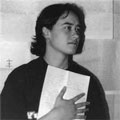
Deported: Weasel's Diary
Produced by Joe Richman
Broadcast on Broadcast on This American Life 05/99


[intro music]

IRA GLASS, HOST: In 1996, tough new immigration laws were passed making it easier to deport legal U.S. residents who committed crimes. The law expanded the definition of a deportable crime, and made the change retroactive. Gang members from the United States were suddenly being exported in larger numbers to their countries of birth, and many of them greeted these new homes away from home by acting exactly how they had acted here in the States. There have been big, big rises in gang activity in El Salvador and other countries as a result of the new laws. Jose William Huezo Soriano, a.k.a. Weasel, was deported just over a year ago to El Salvador. He had to make the adjustment from living in a very rich country to a rather poor one. And he had to figure out who to be, in this place that he was told was his new home. Radio producer Joe Richman gave him a tape recorder to document how he is getting along. Hereís the story they put together.

WEASEL: Uh, whatís up, my name is uh, Jose William Huezo Soriano. They call me Weasel. Iíve been having that nickname ever since I was a kid, so Iíve had it for a long time. Letís see, here we go, [hear numbers being pushed on phone] I am dialing um, out of the country right now. Zero, one, eight, one, eight, fiveÖI am 27 years old. I live in El Salvador. Iíve been here a year, a year and a half. Itís ringing. [hear faint hello on other end of phone]. Hello, [hi]. Flora, whatís up?
FLORA: Nothing much, how you doing?
WEASEL: Iím doing good.
FLORA: My goodness, where are you?
WEASEL: Iím in El Salvador, where else?
FLORA: [laughs]
WEASEL: I just wanted to talk to Mom, eh, and see how sheís doing.
FLORA: Sheís right here, hold on.
WEASEL: All right.

WEASEL: My mom, my mom is cool man. My momís name is Esther. Esther [pronounces name in Spanish]. And I have her name tattooed on me. Like with a little rose.

MOTHER: Hi hijo.
WEASEL: Mom!
MOTHER: Como est·s, mi hijito?
WEASEL: Bien, mom. Y como est·s, mom?
MOTHER: Estoy bienÖ

[Conversation fades. Hear mother speaking to Weasel in Spanish]

WEASEL: I am the youngest of 7 kids. I come from a close knit family, you know. We are used to being around each other, you know. My momís in L.A., she lives in Burbank. My sisterís in Burbank. All my nieces and nephews are in Burbank. My brotherís in North Hollywood. And, here I am.

[Mother's voice fades up]

WEASEL: Sheís telling me she likes me to call her up and tell her that I am doing all right. Because then she feels all right.

WEASEL: Bueno, mom. Te quiero mucho.
MOTHER: Estas bien? Verdad?
WEASEL: No, estoy muy bien, mom.
MOTHER: O.k. I love you mi hijo.
WEASEL: I love you mom.
MOTHER: O.k. mi amor. I love you mi amor.
WEASEL: O.k. Bye.

[hangs up, music fades in]

WEASEL: I got this document right here. It says my full name, and it has a little box right here that is checked. And it says, "deportable under section blah, blah, blah. Removed from the States." Anyways, uh, the bottom line is that, [laughs] Iíve been banished from the U.S. you know. Like they used to do in the medieval days. They used to ban fools. [laughs] [music fades] I went to kindergarten in L.A., elementary school, junior high school, high school. I grew up singing, you know, My Country ëTis of Thee [chuckles]. You know that little song America the Beautiful. I learned, you know, pledging allegiance to the flag. I grew up with all that. You know? And here they are, 27 years later, kicking me out.

[street traffic, honking]

WEASEL: O.k. We are en route to San Jacinto. This is uh, the Number 5 bus. Going to downtown. These are like old school buses from the United States that they send over here, paint ëem up, then they use ëem for public transportation. Everybodyís looking at me weird. Cause Iím like wearing glasses, headphones, I got this microphone. I am just looking at the people, all the little shacks, thereís these little shacks on the side of the road. Itís a trip right here. Well, maybe I should tell you little about um, when I first got here. Damn. [pause] As I was uh, driving to the city from the airport, [chuckles] it was hot. I would just like look to the side and see just little adobe huts, shacks. And I was like "No, I ainít staying here, man. This is crazy man. I ainít gonna live like in no mud hut, you know." It was like if they sent me back 200 years. They might as well have put in Mars. [bus slows down] Weíre pulling over now.

[bus stops, door squeaks open]

WEASEL: O.k. Here we are. Weíre in San Jacinto already. These streets weíre walking on, this is where I first came when I got deported. I didnít know anybody in El Salvador. Cause all my relatives are in the United States, you know. So I got a hold of one of my dadís distant cousins that he hadnít seen for like, 10, 20 years. She gave me a break and let me stay here, you know. Hola! [shouts to someone in the distance. Laughs] ComÛ est·s, TÌo? When I first got here, everybody thought I was a weirdo. [quacking in background] They didnít even believe I was from here cause I had such a tough time speaking Spanish. I speak Spanish, but a different Spanish, you know? [entering house] Iím walking in the door. I stayed in that room right there. Itís um, it was like a storage room. Iíll open this door here. [door squeaks open. Sound of switch being thrown] Pero no hay el luz que no traza, eh. Thereís no light here. Uh, when I first got here, I looked at the place where I was going to stay, and I said "This is it?" Cause I walked in, and all I seen was like pieces of wood like nailed together, and the house was made out of concrete, but it was all dark. The toilet was like, [laughs], in the middle of the yard. It was like a little outhouse. It was just like nothing I was used to, you know? I spent the night in this room. The first day I was there, I almost was falling asleep, and a big old cockroach, that sucker had to be at least 3 inches, fell right on my chest, man. And I just jumped up. I grabbed at it and I just threw it, and I heard it, thatís how big it was. I heard that sucker fly across the room, boom, hit a wall. And I heard that sucker actually run away, [makes pitter-patter sound]. It was trip man. [laughs]

[music fades in]

WEASEL: When I was like in the I think third, fourth grade, my teacher sent me to get an I.Q. test, and they recognized me as gifted and talented. And, my parents telling me like "Oh, youíre intelligent. Youíre going to be a doctor, a lawyer." But, you know, things happen when youíre growing up. And um, you get caught up in other things, you know.

[music fades out]

WEASEL: My criminal history started when I was juvenile. Iím kind of a short guy, you know, Iím not too tall, but I was like a little tough kid. I got into the gang when I was like, 14 years old. I was into drugs and violence and stuff, auto burglary, you know. I was living a crazy life. So I was just hanging out with my home boys one day and had a little gun. Took it. A little .25 I think it was, .22, I donít know. We were cruising in this neighborhood and seen some people. Driver pulled over. Me and the other guy walked out. Went up to the people. Told ëem, "Itís not worth it man, give it up." So, they gave it up. Their wallets, their purses, watches. So we took off, you know, went to go pawn the stuff. But as we were leaving the pawn shop, boom, the cops swooped on us. Drew their guns, you know, put us all face down in the middle of the street. Helicopter, in front of every body, you know. Big old scene. Took us in. Gave me three years in prison.

[music fades in]

WEASEL: Anyways, right when my time was about to finish in prison, I was out in the yard playing hand ball. They came and called me, and an INS agent came to visit me. I didnít think nothing of it, cause I thought he was just gonna ask me, like, whereís your green card or whereís your papers, you know. So, he interviewed me to prove I was El Salvadorian, right. They said, "Whatís the national anthem?" I was like, "Man, I donít know." "Whatís the biggest railroad?" I was like, "What?" I told him, "Look man, I donít know nothing about El Salvador. Iíve been in this country for over, you know, 20 years man. I donít know nothing about that country." He was all pissed off ëcause I didnít know what the biggest river was. I mean, I grew up in L.A.. The longest river there is L.A. River, you know? [laughs] Anyways, the bottom line is that they said theyíve seen a pattern of criminal history and criminal activity. They felt like, you know there was no chance for me. That I couldnít change. And thatís why they deported me, you know.

[music fades out]

WEASEL: The longest river here is RÌo Lempa. The Lempa River. And it goes all through El Salvador. Well, I know that now. [laughs]

[sounds of bus, traffic]

WEASEL: Right now weíre driving through, making some bus stops. This is like MS territory. And about 4 or 5 blocks down, weíre going to enter a different gang territory. [pause] This is a little paragraph in a tour guide book. It says On Your Own in El Salvador. And thereís a little paragraph here thatís kinda highlighted, and it says Gang Trouble: "Gang violence in cities the like L.A. and New York has spurred the U.S. government to deport many of its worst offenders back to their native countries. For some Salvadorians with a history of violence and arrest, that means a return trip to El Salvador." So this is in a guide book. I feel like I'm a tourist. A permanent one. [laughs, sounds fade]

[music, restaurant sound fades in]

WEASEL: Weíre at this place that serves Mexican food called Que Taco Garabato. I've tried the tortas here, they are excellent. I recommend them a lot. But Iím gonna try a quesadilla today. [orders in Spanish] Now that I accepted that the fact that I have to stay here, I started changing a few things you know. Iíve had a lot of help from like, my family. My cousins, they make furniture here, theyíre carpenters by trade. I worked with them, you know, for no pay. I didnít mind. Considering the fact that I was a criminal and I got deported and they heard a little bit about my, uh, past, you know. Considering all that, they still let me stay. I really appreciate it, but, uh, now I live out on my own. [waitress arrives] Oh, the foodís here. A little chile right there, and the food looks delicious. When I came back here, I remembered a few things. Foods that I hadnít smelled or tasted like, for years. And I tried it and I go, " I know this flavor". You know? And then, bam, I remembered this flavor from when I was kid. I mean, itís like trying to remember a dream. Itís like fuzzy, you only remember like little pieces. [pause] Mmm, mmm. And you can see, I am talking with my mouth full. Iíll take a little break here. Savor the delicacies, [laughs], get back at you in a few minutes. Out.

[restaurant sounds fade out]

[Spanish music fades in]

WEASEL: Where I live right now, actually itís a good looking place. Itís got a high ceiling, itís pretty big. My room, I had it all painted. I did like some graffiti style spray paint, like artistic stuff. Anyways, right now I'm just playing some music. [music fades up] Pedro Infante is a Mexican Ranchera singer. My dad used to like Pedro Infante. Itís just something about the music that brings back a lot of memories.

[music, Pedro Infante sings]

[hear pages turn]

WEASEL: I got a little black photo album in front of me here. [page turns] O.k. Thereís a picture of me in fifth grade. I had long hair. Had a Pink Floyd shirt on. [laughs] Iím wearing Vans and, you know, Levis. [page turns] Hereís picture of my brother skateboarding. We had a half pipe in my back yard, you know. [laughs] Just some memories, you know. I guess my closest relationship that I had would be with my brother. Heís six years older than me. And he took care of me a lot. I remember this one time we were hanging out and there was these two really pretty girls. My brother was already a teenager, you know. He was trying to make out with this girl, and I liked her friend, you know [laughs] So I tried to do the same thing my brother did, but, so I tried to kiss the girl and she popped me in the mouth [laughs] And busted my lip and I started crying. [laughs] And I, I remember my brother like, he was just like hugging me, holding me telling me, "hey, shh, be quiet, be quiet, come on". Cleaning the blood off my lip with his shirt. [pause] I donít know, for some reason, I always thought I was smarter than my brother. I mean I spoke better English. I had better skills, like math skills. But my brother he always did the right thing, you know. My brother is a L.A. Sheriff. And me, you know [laughs] Iím the convict. He did good things, you know, I did bad things. My brother joined the army. I joined a gang.

[sound of people talking, music]

WEASEL: Que paso?
FRIEND #1: Whatís up?
WEASEL: Whatís this, whatís this game called?
FRIEND #1: I donít know the name of it.
WEASEL: Hey, uh, you got Beatles here?
FRIEND #2: Yeah, we got that.
WEASEL: All right, weíre going to play the Beatles right now.

[music: She Loves You, Yeah, Yeah, Yeah]

WEASEL: Itís a little loud. We got the Beatles playing in the background. Just relaxing right here at the billiards. Brand new billiards. Thereís florescent lights. Itís cool man. Itís like a place in the United States.

WEASEL: Chalk?
FRIEND #2: Chalk.
WEASEL: Whereís the chalk at?
FRIEND #1 and #2: I donít knowÖ

[music fades a bit]

WEASEL: Well, when I first got here, I didnít know anybody. So one day, I, I seen two guys in the distance, like dressed in L.A. style. Like baggy. And I said, those guys ainít from here, you know. Right off the back, I knew they werenít from here. As he got closer, I said "Damn, I know that fool. He looks familiar." And he got closer and I said "Yo, thatís him." And I told "Whatís up, fool?í [laughs] And he looks at me, you know and heís like "Daaamn! Damn." He couldnít stop saying "damn". You know. He was just like "Damn, whatís up, man?" He goes "Youíre from here?" And I said "Yeah man, I got deported man." Heís like damn, me too man. Whatís up? Daaamn."

[sounds of pool hall]

WEASEL: I see you got a little more tattoos. You got one on your arm, by like your elbow. What does that say right there?
FRIEND #3: It says Pokey rest in peace.
WEASEL: I see you got a real nice one on your leg. Some real good work. Um, who did that work? [laughs] Just kidding, I did it. [laughs] They make you dress like this to go to work?

[background sounds fade under]

WEASEL: I ran into other guys I know from prison and, you know, they are doing all right. Thereís Edgar. He did some prison time, he got deported. Alex. Frank. Rabbit, it didnít matter that he had kids that were U.S. citizens, they deported him anyway. They split up his family. Ringo has kids too, a little daughter. [pause] Theyíre like my second family, you know.

[noise of street, music, singing]

WEASEL: We are out on the street now. Walking by the mariachis here [men singing with guitar] Weíre going to see what thatís like right now.

FRIEND #4: Here they come, watch out.
WEASEL: Oh, here they come, you did it now man. [music and singing gets louder] Chiquita, chiquita. [laughs]

[mariachi band sings, then music fades under]

WEASEL: Itís weird, but um, in a way Iím glad, you know Iím not in L.A. Over there in Los Angeles, a lot of guys are dead, or spending life in prison, or just lost in drugs, you know. I feel lucky because Iím alive still. Iím just through with that life style, you know. Iím doing good, Iím working. Iím doing the best Iíve ever done, in my life. Damn, I feel more alive now. I just, I woke up. I just snapped out of it. I feel like Iíve been given a second chance.

[music fades up, band finishes song, a few claps, fades to black]

[sound of tape rewinding]

WEASEL: Here I am in my living room. I got this video. Itís a tape that my family recorded. [button pressed] Letís see whatís on here. [hear voices from the tape] Thereís Burbank where we live. I see the main street right there, Victory. The apartments where my mom lives, and my sister lives next door. Iím going to turn up the volume a little bit. [Motherís voice saying hello] There goes my mom [laughs] sheís smiling all goofy making faces at the camera. Sheís all nervous, she doesnít know what to say. [laughs] [mother's voice in Spanish] My mom says she sends me uh, hugs and kisses and that she loves me, she misses me. I havenít seen my mom for like over a year, a year and a half. I know Iím gonna see her soon, but as for me to go live with her and just like be around her, thatís impossible now. [pause] I imagine that. Seeing my mom, hugging her, feeling the love that she generates, you know, like damn. Having a meal with her, talking to her, laughing with her, seeing my family. [laughs] Iíll be 47 years old by the time I'm eligible to go back. Forty seven man, I donít think I might even want to go back at that age. My mom ainít gonna live no [pause], you know, sheís 66 right now. Sheís not gonna live no 20 years man. Itís f**ked [bleeped out] up.

[childrenís voices from tape saying "We miss you", "I love you" "See you soon"]

[video tape stops]

WEASEL: That was the end of the tape. Everybodyís happy in the video. They are telling me they miss me, they love me, you know. Thatís really good to hear once in a while. Especially if itís prerecorded, you know, you can always play it again and again. [laughs]

[hear click of button on video machine]

[music of Pedro Infante fades in]

WEASEL: Well, Iíve got a few minutes left. Before I close, I just want to say whatís up to my familia. Let you all know that I am thinking of you. And I donít want you guys to worry cause Iím living good here. I love you mom, I miss you. And I know youíre proud of me. Thatís about it. Iím signing out. Itís a rap. [laughs]

[music ends]

IRA GLASS, HOST: These days, Weaselís job is working with an organization in San Salvador called Homies Unidos. Heís their treasurer. The group is made up of current and former gang members who are working to reduce gang violence in El Salvador. Weasel wanted to dedicate this radio story to his friend at Homies Unidos, Ringo, who is mentioned in this story actually, and was shot and killed in El Salvador last week. Weaselís diary was reported and narrated by Jose William Huezo Soriano, that is, by Weasel. His story was produced by Joe Richman as part of the "Radio Diaries Series" with help from Wendy Dorr.


© Joe Richman/Radio Diaries, 1999